Bucket test versus professional pool leak detection: which fits your situation
Every pool loses some water to evaporation and splashing. But when the water level drops faster than normal, the question becomes whether you have a small evaporative loss or a real leak. Pool owners often start with a simple bucket test to get a rough idea. Professional leak detection goes further, using specialized tools and training to pinpoint the exact source. Understanding what each approach can and cannot tell you helps you decide which one suits your situation.
What the bucket test actually measures
The bucket test is a do-it-yourself method that compares evaporation from the pool with evaporation from a bucket of water placed nearby. You fill a five-gallon bucket with pool water to about the same level as the pool, mark the water line inside the bucket, and mark the pool water line on the skimmer or tile. After 24 hours of normal pump operation, you compare the two drops. If the pool lost more water than the bucket, the extra loss suggests a leak somewhere in the pool structure or plumbing.
The test is simple and costs nothing but time. It can give you a yes-or-no clue when the weather is calm and the pool is not being used. Still, the bucket test has real limits. Wind, heavy rain, or a drastic change in temperature can throw off the readings. Even on a still day, the bucket sits above ground and warms up faster than the pool, so evaporation rates differ. The test also tells you nothing about where the leak might be. You only learn that something is probably wrong, not where to look.
When the bucket test gives useful information
For a pool that loses an inch or more per day in mild weather, the bucket test can quickly confirm that the loss is not just evaporation. If the pool and bucket lose similar amounts, you can feel more confident that the drop is normal and save yourself the cost of a service call. Many pool owners run the test once or twice a season as a quick check. It works best as a screening tool, not as a final diagnosis.
The test also helps you track changes over time. If you notice the water level dropping faster than it did a month ago, running a bucket test can tell you whether the rate has shifted. That information can be useful when you talk to a technician later.

Professional leak detection: what it involves
When a bucket test points to a leak, or when you cannot find the source on your own, professional leak detection brings in equipment and experience that a homeowner does not have. Technicians use pressure testing on plumbing lines, dye testing in cracks and fittings, and listening devices or thermal cameras to trace water movement. The goal is not just to confirm a leak but to locate it within a few inches so that repairs can be targeted.
Professional methods work for all parts of the pool system. Leaks in the shell, the skimmer, the light niches, the return lines, and the underground pipes each require a different approach. A pressure test on the plumbing, for example, can tell whether a line holds air or loses pressure, which points to a break. Dye testing involves placing a small amount of colored dye near a suspected crack and watching whether the current pulls it into the opening. These techniques are precise but require training and the right tools.
Comparing the two approaches
The bucket test is a low-cost preliminary check. It can tell you that a leak likely exists, but it cannot tell you where. Professional leak detection is a diagnostic service that finds the leak and measures its severity. The two methods serve different purposes, and many pool owners use both: the bucket test as an early warning and professional help finding pool leaks when the problem persists or the source is hidden.
Here is how they stack up side by side:
- Cost: The bucket test costs nothing but your time. Professional detection involves a service fee, but that fee is often far less than the cost of digging up a whole patio to find a pipe leak blind.
- Accuracy: The bucket test gives a rough estimate of water loss. Professional tools can locate a leak within inches and measure the flow rate.
- Scope: The bucket test only compares evaporation. Professional detection covers the pool shell, plumbing, fittings, and equipment pad.
- Time: The bucket test takes 24 hours to run. A professional can often diagnose the leak in an hour or two.
- When to use each: Start with a bucket test if you suspect a leak and want a quick check. Call a professional if the test shows a loss or if you cannot find the source after checking obvious spots.
Signs that call for more than a bucket test
Some clues point strongly to a leak that a bucket test will not help you find. A sudden jump in your water bill, for instance, means the pool is losing water somewhere, and the meter is registering the replacement water. Air bubbles in the pump basket or water shooting out of the return jets in a sputtering pattern can indicate a suction-side leak in the plumbing. Cracks in the pool surface, loose tiles, or wet spots around the equipment pad are also red flags. In these cases, you already know something is wrong. What you need is the exact location, and that is where professional tools make the difference.
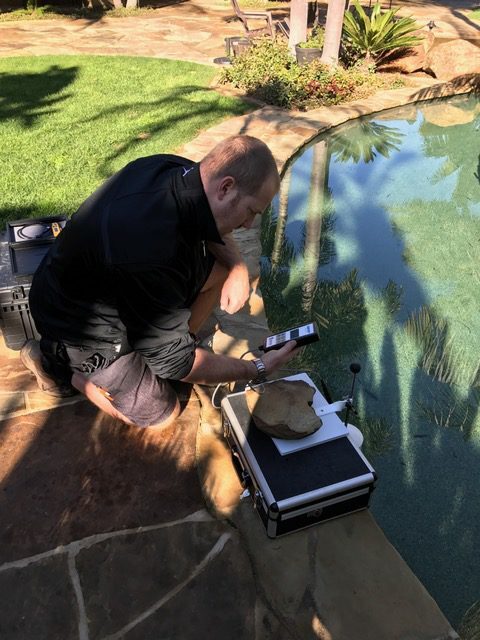
Weather conditions also affect how useful a bucket test is. A test run during a windy week or a rainy spell will give unreliable results. If you wait for a calm, dry day and the test still shows an abnormal loss, you have a stronger case for calling a technician.
When to skip the bucket test and go straight to a pro
If the water level drops more than an inch overnight even when the pump is off, you are likely dealing with a significant leak. The same applies if you see water pooling under the pool deck or near the equipment pad. In those situations, the bucket test just confirms what you already know. You are better off getting professional help finding pool leaks so the repair can happen sooner and prevent further damage to the pool structure or landscaping.
Another scenario is a leak in the underground plumbing. A bucket test cannot tell you whether the water is seeping out of a pipe buried three feet down. Only a pressure test or a listening device can trace that. If you suspect a plumbing leak, skip the bucket test and contact a leak detection service directly.
Practical advice for pool owners
Run a bucket test at the start of each season to establish a baseline for normal water loss. Keep a log of the readings and note the weather conditions. If you see a change from your baseline, you have early warning. From there, decide whether the loss is small enough to tolerate or big enough to warrant a service call. Remember that a small leak can grow over time, so it is worth investigating even a moderate loss.

When you do call a professional, ask what methods they use and whether they provide a written report. A good technician will explain what they found and what the repair options are. The goal is to fix the leak with minimal disruption to your pool and yard.
Both the bucket test and professional leak detection have a role in pool maintenance. The bucket test is a free, simple way to keep an eye on water loss. Professional detection is the reliable path when you need answers. Used together, they help you keep your pool in good shape without wasting water or money on unnecessary repairs.